
Root Canals in Parma, OH
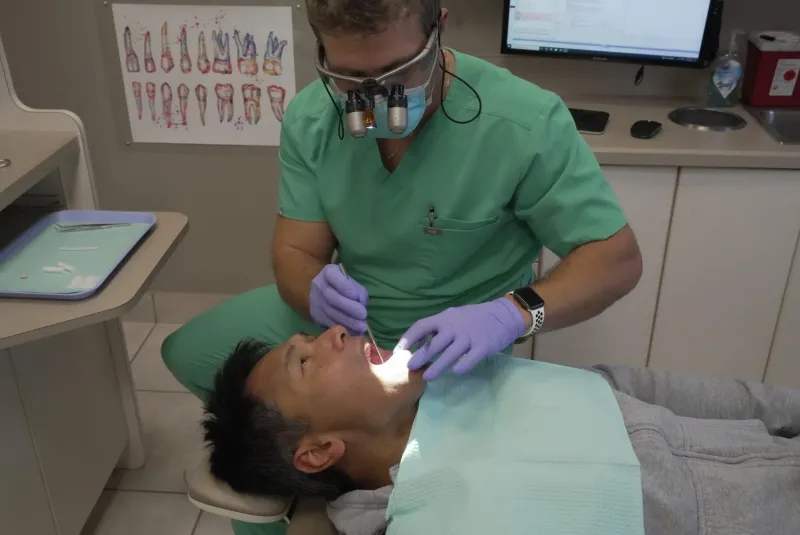
A root canal saves your natural tooth. That is worth doing, and it is not the procedure most people are dreading.
When the inside of a tooth gets infected, removing the infection is what stops it from spreading and keeps the tooth from needing to be pulled entirely. Dr. Job performs root canals in Parma using techniques that make the procedure no more uncomfortable than a routine filling. The area is fully numbed before anything starts, and patients who expected the worst consistently leave surprised.
You keep your natural tooth, you avoid a more involved extraction and replacement, and the whole thing is handled by the team you already know.
Patients across the south Cleveland area come here for root canals because the comfort-first reputation extends to the procedures people fear most.
I'm terrified of root canals. Is that fear based on reality?
Mostly no, and that fear is built almost entirely on experiences from decades ago. Modern root canals use the same numbing techniques as any other dental procedure, and most patients say the procedure itself was far less uncomfortable than they anticipated. Research tracking over 46,000 treated teeth found a median survival rate of eleven years, confirming this is a reliable and routine treatment. The anticipation is almost always significantly worse than the actual experience at this practice.
My tooth has been throbbing for days and I keep putting off calling. What happens if I wait?
A tooth that throbs consistently is almost always signaling an infection in the pulp. That infection does not heal without treatment. Waiting longer gives the bacteria more time to spread into the surrounding bone and tissue, making treatment more complex and recovery longer. The sooner the infected pulp is removed, the sooner the pain stops for good, rather than continuing to manage it with pain relievers that only mask the problem temporarily.
Does a root canal actually hurt during the procedure?
No. The area is fully numbed before any work begins, and the procedure itself involves no sensation beyond pressure. A root canal removes the nerve tissue from inside the tooth, which means the tooth cannot feel pain during treatment. Most patients say the anticipation was significantly worse than the actual experience. The main discomfort associated with root canals comes from the infection itself, which the procedure resolves.
Frequently Asked Questions
Keeping your natural tooth is almost always the better long-term outcome. Once a tooth is extracted, the surrounding bone begins to shrink, and the adjacent teeth gradually shift toward the gap. A root canal saves the root structure that holds all of that in place. Extraction followed by an implant costs significantly more than a root canal and crown combined.
A tooth that has had an active infection for a while is more complex to treat, but it is often still salvageable. The earlier you come in, the more options you have. Dr. Job will assess exactly where things stand and give you a realistic picture of what treatment involves and what it will cost before anything is scheduled.
A root canal on a front tooth, which has a single canal, typically takes sixty to ninety minutes. Molars with multiple canals may take longer or require a second appointment to complete. You will be numb throughout and can drive yourself home afterward. Dr. Job schedules adequate time for each case so the appointment does not feel rushed.
In most cases, yes. Root canal treatment removes the pulp from inside the tooth, leaving the remaining structure more brittle and prone to fracture under normal chewing pressure. A crown caps the tooth and protects it from cracking. Research shows that teeth restored with crowns after root canal treatment have nearly twice the long-term survival rate compared to those left without a crown.
Signs that an infection may have spread include visible swelling in the face or jaw, a fever, difficulty opening your mouth fully, or a bad taste that persists despite rinsing. If you have any of these symptoms, treat it as an emergency and call the office that day. Facial swelling from a dental infection can progress quickly and in serious cases requires more than just dental treatment.