
Periodontal Disease Care in Parma, OH
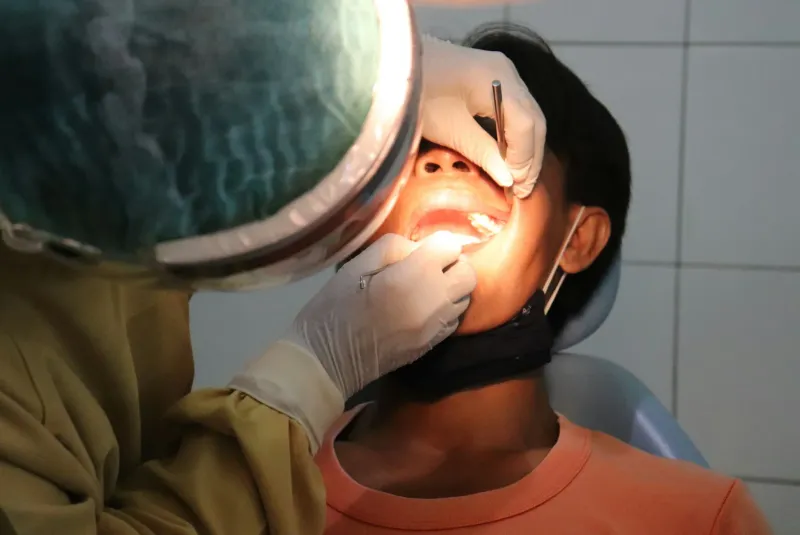
Gum disease is the leading cause of tooth loss in adults, and nearly half of adults over 30 have some form of it right now according to the CDC.
Most of them do not know it because it rarely hurts in the early stages. Dr. Job treats periodontal disease in Parma without sending you to a separate specialist, and the approach here is the same one that has earned nearly 500 five-star reviews: honest diagnosis, no pressure, and treatment that matches what you actually need. You are told plainly what is happening and what it will take to stabilize it.
You leave with a clear picture of your gum health and a realistic plan for keeping it that way.
Patients across the south Cleveland area come here for gum disease care because the diagnosis comes without the pressure to accept an expensive treatment plan on the spot.
My dentist keeps saying I need a deep cleaning even though I just had a regular one. What is the difference?
A standard cleaning removes buildup above the gumline. A deep cleaning, or scaling and root planing, removes buildup from below the gumline where a regular cleaning cannot reach. If gum disease is present, a regular cleaning does not address it because it does not get to where the bacteria are actually living. These are different procedures with different purposes, and needing one does not mean the other was unnecessary. Dr. Job explains exactly what the examination revealed and why each recommendation is being made.
I was diagnosed with gum disease years ago and never went back for follow-up. What happens now?
This is more common than most patients realize. Gum disease progresses silently, without pain in most cases, while bone loss accumulates. Coming in now allows Dr. Job to assess where things stand today and determine what level of treatment is appropriate based on your current condition. You will not be judged for the gap in care. The focus here is entirely on stabilizing the situation from this point forward.
Will the deep cleaning hurt more than a regular cleaning?
Scaling and root planing is done with local anesthesia so the area being treated is numb throughout the procedure. Most patients find it significantly more comfortable than they anticipated. After the anesthesia wears off, some tenderness and sensitivity in the gums for a few days is normal as the tissue heals. Following the at-home care instructions Dr. Job provides after each session makes that recovery period as comfortable as possible.
Frequently Asked Questions
Brushing cleans the surfaces of teeth, but it does not remove the bacteria that settle below the gumline in the pockets around your teeth. Gum disease develops in that subgingival space regardless of how well you brush. Genetics, certain medications, and systemic conditions like diabetes can all accelerate gum disease in people who maintain good home care habits.
Gum disease is the leading cause of tooth loss in adults, but early and consistent treatment dramatically changes that outcome. Caught and managed properly, most patients keep their teeth long term. Dr. Job's approach is honest about severity and focused on stabilizing the condition before it progresses further. The goal is always to preserve what you have.
Yes, in the sense that it cannot be cured, but it can be controlled. With proper treatment and consistent maintenance appointments every three to four months, most patients achieve stability and keep their teeth without the disease progressing. Think of it like managing blood pressure: the condition does not disappear, but it can be maintained at a level that does not cause ongoing damage.
Non-surgical periodontal treatment typically involves two to four appointments to complete the deep cleaning, usually divided into sections of the mouth. After the treatment phase, Dr. Job reassesses the pockets and determines the appropriate maintenance schedule going forward. Most patients in Parma are looking at an initial phase of one to two months before moving into long-term maintenance.
The earliest stage, gingivitis, is completely reversible with professional cleaning and improved home care. Once gum disease advances to periodontitis where bone loss has occurred, the lost bone cannot be regenerated without additional procedures. The disease can be halted and managed, but damage that has already happened does not reverse on its own. Catching it early always results in significantly better outcomes.
After active treatment, most patients benefit from maintenance appointments every three to four months rather than the standard twice-yearly schedule. This more frequent schedule prevents bacteria from rebuilding to the levels that trigger further progression. Once your gum health has been stable for a sustained period, Dr. Job may adjust the frequency based on how your tissue is responding.