
Clear Braces in Parma, OH
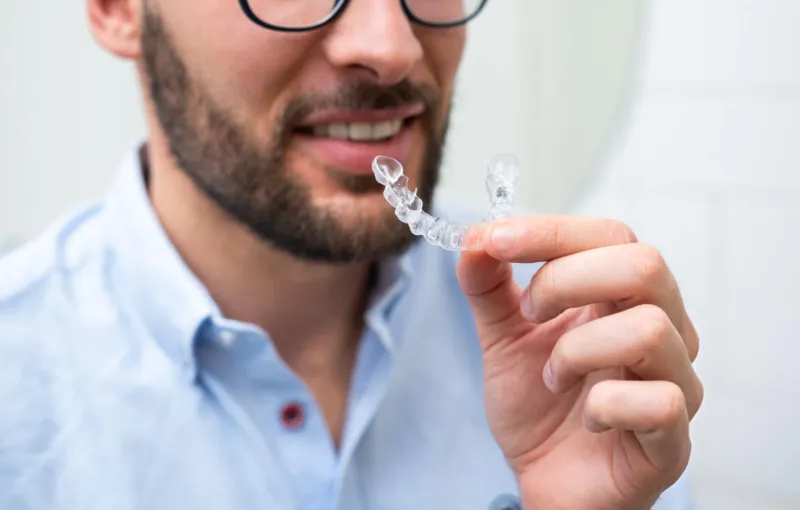
If you want to straighten your teeth without anyone at work or in your family noticing, clear aligners make that possible.
Dr. Job offers clear aligner treatment in Parma for teens and adults, and you will see a digital preview of your finished smile before treatment starts. Research shows that adults between 35 and 50 tend to see especially strong results with clear aligner treatment. The cost difference between clear aligners and traditional braces is usually only a few hundred dollars, not the thousands most patients assume going in.
You pick what fits your life with full information, not a sales pitch.
Patients across the south Cleveland area choose clear aligners here because the conversation starts with honesty about what the treatment involves and what it actually costs.
I need straighter teeth but I cannot show up to work or meetings wearing metal braces. What can I do?
Clear aligners are virtually unnoticeable in most professional settings, which is exactly why adults across the south Cleveland area choose them over traditional braces. Dr. Job offers clear aligner treatment in Parma for both teens and adults. You will see a digital preview of your finished smile before you commit to anything, so you know exactly where treatment is headed before a single tray is made.
I always assumed clear aligners were way more expensive than braces. Is that true?
Current data shows that the cost difference between traditional braces and clear aligners is typically only a few hundred dollars, not thousands. The gap has closed considerably as aligner technology has become more widely available. Before ruling anything out based on assumed cost, get an actual quote from Dr. Job's practice. The answer may be significantly different from what you expected.
How many hours a day do aligners actually need to be worn to work?
Clear aligners need to be worn twenty to twenty-two hours per day to stay on schedule. That means removing them only to eat, drink anything other than water, and brush and floss. Every hour below the recommended wear time slows progress, and significant skipping can cause treatment to stall or require additional trays. The convenience of removability is real, but it requires consistent discipline. Dr. Job is direct with patients about this from the start so expectations are accurate.
Frequently Asked Questions
There are a few common reasons aligner treatment stalls: not wearing them the required hours per day, missing checkup appointments, or reaching a point in treatment that requires refinement trays or a mid-course correction. Dr. Job can evaluate where you are in your treatment and what the best path forward looks like from here rather than starting entirely over.
Yes. This is one of the most common reasons adults pursue orthodontic treatment a second time. Teeth do not stay put permanently after treatment ends and need ongoing retention to hold their positions. Dr. Job will assess how much shifting has occurred and whether new aligners, retainers, or a combination is the right approach for your current situation.
Clear aligners handle mild to moderate crowding, spacing, and certain bite corrections very well. More complex cases involving significant rotation, vertical movement, or major bite discrepancies typically produce better results with braces. Dr. Job evaluates your specific situation and gives you an honest assessment of which option is likely to achieve the result you want rather than defaulting to whatever is easiest to offer.
Contact the office right away. Depending on where you are in treatment, Dr. Job may have you move forward to the next tray, step back to the previous one temporarily, or order a replacement. Time spent without wearing your current tray allows teeth to drift slightly, which can throw off the sequence. Having a plan for this situation is part of the conversation at the start of treatment.
Attachments are small tooth-colored composite bumps bonded to certain teeth to help aligners grip and move them more precisely. Not every case requires them, but more complex movements often do. They are made to match your tooth color and are much less visible than metal brackets. Dr. Job will show you the treatment plan before any attachments are placed so you know exactly what to expect.
Retainers. Once treatment is complete, retainers are the only thing that keeps your teeth in their new positions. Most patients wear a retainer nightly indefinitely. Teeth do not stabilize permanently on their own after orthodontic movement. The investment in treatment is only protected if retention is taken seriously, and Dr. Job explains the retention plan in detail before treatment begins so it is never a surprise.