
Will Professional Teeth Whitening Work for My Stained Teeth
If your teeth are stained or discolored, you might have thought about teeth whitening. You’ve probably seen ads for over-the-counter whitening strips, trays, or charcoal products. But if those haven’t given you the results you want, or if you’re wondering whether professional teeth whitening would actually work for your specific stains, you’re not alone.
The short answer is: professional teeth whitening works for many types of staining, but not all. Understanding what causes your stains and what professional whitening can actually do will help you decide if it’s the right solution for you.
What Causes Tooth Staining?
Not all tooth stains are the same. The cause of your discoloration matters because it determines whether professional whitening will help.
Extrinsic stains are on the surface of your teeth. They’re caused by:
- Coffee or tea
- Red wine
- Tobacco use
- Certain foods
- Poor oral hygiene
Intrinsic stains are inside the tooth. They develop when staining particles get through the enamel and stain the dentin underneath. Causes include:
- Aging (dentin naturally darkens over time)
- Certain medications (like tetracycline antibiotics taken during tooth development)
- Trauma to the tooth
- Excessive fluoride exposure during childhood
- Root canal treatment
Age-related staining happens because your enamel gets thinner over time, revealing more of the darker dentin underneath.
How Professional Teeth Whitening Works
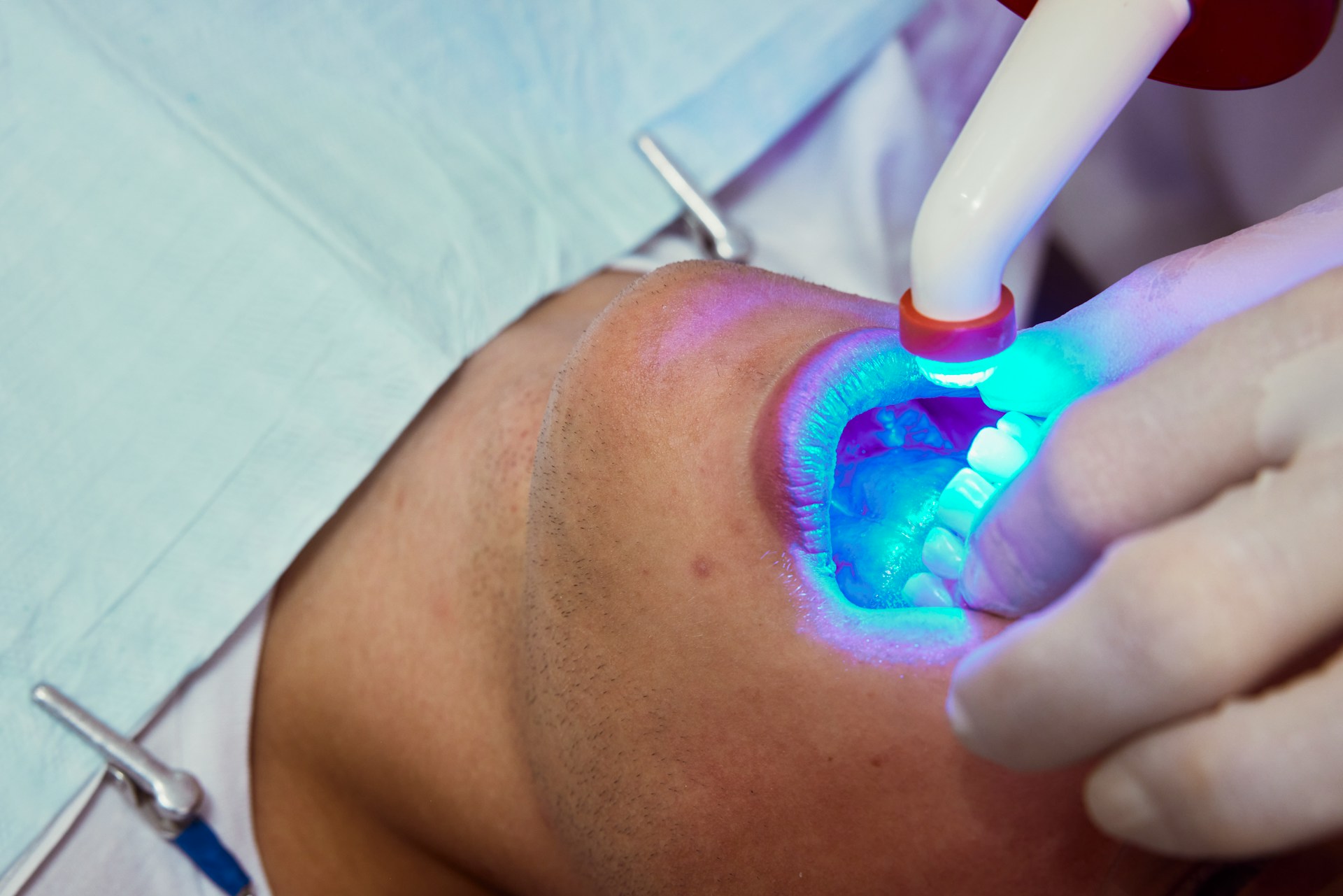
Professional teeth whitening uses a bleaching gel with a higher concentration of the active ingredient (usually hydrogen peroxide or carbamide peroxide) than over-the-counter products. Your dentist applies this gel directly to your teeth, sometimes using a special light or laser to enhance the effect.
Professional whitening typically produces results much faster than store-bought options, and the results are usually more dramatic.
What Professional Whitening Can Do Well
Professional whitening is very effective for:
Extrinsic stains: If your teeth are stained from coffee, tea, wine, or tobacco, professional whitening will likely give you excellent results. These surface stains respond well to bleaching.
Age-related yellowing: As we age, our teeth naturally yellow. Professional whitening can brighten teeth that have become dull or yellow over the years.
Recent discoloration: The fresher the stain, the easier it usually is to remove. If your teeth became discolored recently, whitening is likely to help significantly.
General yellowing: If your teeth are just overall yellow or dull rather than having specific stubborn stains, professional whitening usually works great.
Most people who get professional whitening see noticeable results. Many see their teeth become 2-8 shades lighter, depending on their starting point and how responsive their teeth are.
What Professional Whitening Struggles With
There are some types of discoloration that professional whitening can’t fix, or might not help much.
Severe intrinsic stains: If your teeth were stained from the inside out—for example, from tetracycline antibiotics taken as a child—professional whitening might have limited success. These stains are deep inside the tooth and harder to bleach out.
Stains from root canal treatment: Teeth that have had root canals sometimes darken because they no longer have a blood supply. Whitening might help somewhat, but the improvement is often limited.
Gray tones: Teeth that have a grayish tone rather than a yellow tone are often harder to lighten. Gray discoloration often indicates intrinsic staining or the effects of aging on the dentin.
Stains on dental work: Professional whitening only whitens your natural tooth structure. It doesn’t whiten fillings, crowns, veneers, or bonding. If you have a crown or filling on a visible tooth and it doesn’t match your natural teeth, whitening your natural teeth will actually make the mismatch worse.
Severe discoloration: In some cases, discoloration is so severe that whitening alone won’t give you the results you want. In these situations, cosmetic bonding, veneers, or crowns might be better options.
How to Tell If Professional Whitening Is Right for You
Ask yourself these questions:
Are my stains on the surface or deep inside my teeth? If you’re not sure, a dentist can help you determine this. Surface stains respond better to whitening.
Are my teeth discolored from coffee, tea, wine, or tobacco? If yes, whitening is likely to help significantly.
Do I have a lot of dental work (crowns, fillings, veneers)? If your smile includes significant dental work, whitening alone might create an uneven appearance. Your dentist can discuss options with you.
Do I have unrealistic expectations about how white my teeth can get? Professional whitening is effective, but it doesn’t create artificial-looking teeth. It restores your teeth to their natural whiteness and potentially makes them lighter. Talk to your dentist about realistic results for your specific situation.
Am I willing to do touch-ups? Professional whitening isn’t permanent. Results typically last 6 months to 2 years, depending on your habits. Are you willing to get touch-ups to maintain your smile?
What to Expect During Professional Whitening
Your dentist will:
- Examine your teeth to determine if you’re a good candidate
- Take photos for before and after comparison
- Clean your teeth to remove surface buildup
- Apply a protective barrier to your gums
- Apply the whitening gel to your teeth
- Use a special light (optional, depending on the system)
- Leave the gel on for 15-30 minutes
- Rinse and repeat (usually 2-3 cycles)
The whole process usually takes 30-90 minutes.
Potential Side Effects
Professional whitening is safe, but some people experience:
- Tooth sensitivity (temporary)
- Gum irritation (rare, especially with professional application)
- Uneven whitening (rare)
Your dentist will discuss these risks with you and can take steps to minimize them.
Alternative Options
If professional whitening isn’t right for you, your dentist might recommend:
- Bonding: Tooth-colored resin applied to the surface to cover stains
- Veneers: Thin shells placed over the front of teeth to cover discoloration
- Crowns: For severely discolored or damaged teeth
Making Your Decision
The best way to know if professional teeth whitening will work for your stains is to consult with your dentist. They can examine your teeth, identify the cause of your discoloration, and recommend the treatment that will give you the best results.
If you’re in Parma, Ohio, and you’re interested in brightening your smile, schedule a consultation. We can assess your teeth, discuss your goals, and let you know whether professional whitening is the right choice for you or if another option might work better.
A bright, white smile is achievable. Let’s figure out the best way to get you there.