
If you’ve had a tooth pulled, or you’re still walking around with one that’s been failing for months, you already know this conversation is coming. The question is just what to do about it.
Dental implants are usually the best long-term answer. Not always, but most of the time. And the more you understand how the process works, the less overwhelming that decision feels.
What Makes an Implant Different From Everything Else
The short version: an implant replaces the root, not just the tooth.
A bridge fills the space by anchoring to the teeth on either side. A denture sits on top of the gum. Both are reasonable options in the right situation, but neither one stops the bone loss that begins when a root is gone. That loss is slow, and most people don’t feel it happening, but over time, it changes the shape of your jaw and makes future dental work harder.
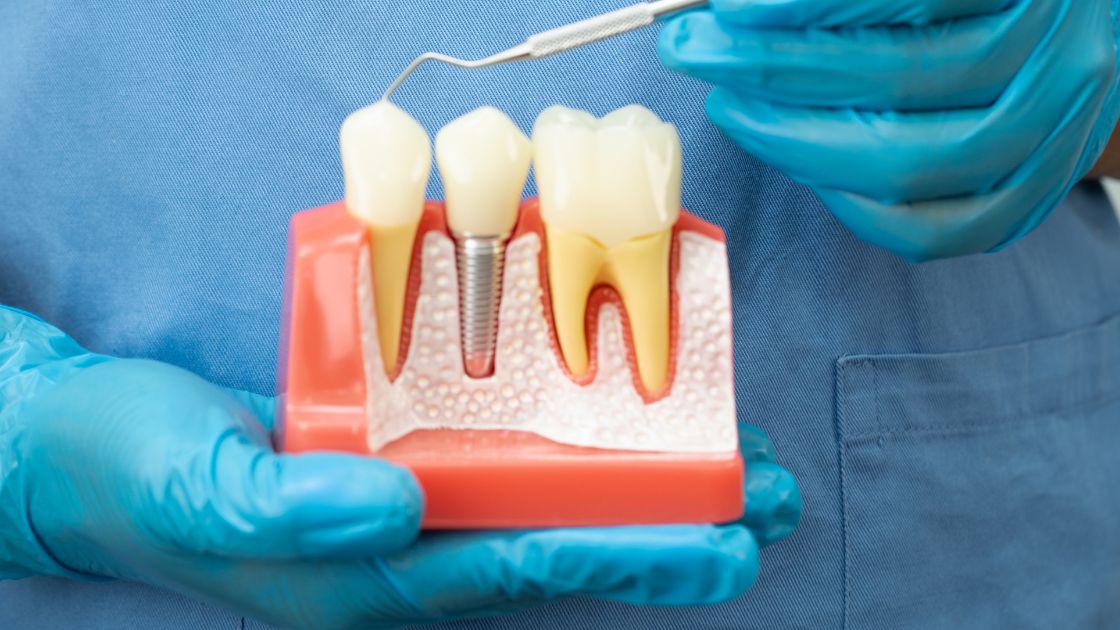
An implant puts a titanium post into the jawbone. The bone fuses with it, a process called osseointegration. That takes a few months. Once it’s solid, a custom crown goes on top. The result looks and works like a tooth. You brush it like a tooth. You don’t take it out at night.
The American Academy of Implant Dentistry reports implant success rates consistently above 95 percent, which holds up better than most alternatives over the same timeframe. They’re not indestructible, but with normal care, they can last decades.
When the Process Involves More Than Just the Implant
Here’s something most people don’t hear until they’re already in the chair: not everyone goes straight from extraction to implant.
If a tooth has been missing for a while or was removed due to infection or significant bone disease, the jawbone may have already lost too much volume. You can’t place a stable implant in bone that isn’t there. So a bone graft comes first. It rebuilds the foundation. Then you wait for that bone to mature, usually several months, before placement can happen.
This is why timelines vary so much. One patient might go from consultation to final crown in four months. Another might be closer to a year if grafting is part of the picture.
Neither timeline is a problem. It’s just the process, and knowing that going in is a lot better than being surprised halfway through.
What matters practically is working with a provider who handles both steps under one roof. Coordinating between two separate offices adds friction, delays, and often costs more. Jordan M. Job DDS does the full process in-office in Parma, including bone grafting when it’s needed.
Implant-Supported Dentures Are Worth Understanding
If several teeth are missing, or you’ve been managing with a full denture that shifts when you eat or speak, implant-supported dentures are a different category than what you might be picturing.
A few implant posts anchor the denture so it doesn’t move. You can speak clearly. You can eat foods you’ve been avoiding. The bone preservation benefit is still there because the implants are doing what roots do. For people who’ve spent years adjusting their diet or feeling self-conscious about a denture that doesn’t sit right, the daily difference can be significant.
If you’re weighing implants against traditional denture options, this breakdown of dentures and partials walks through the comparison in plain terms.
The Cost Conversation
Nobody loves this part, but it’s usually the first thing people want to know.
Implants cost more upfront than alternatives. A single implant with a crown typically runs somewhere in the $3,000 to $5,000 range, depending on what’s involved, though bone grafting or other prep work will affect that number in your specific situation.
Dental insurance coverage for implants has improved over the years, but it’s still limited. Many plans will cover a crown but not the implant placement itself. We recommend checking with your insurance before the consultation.
The honest comparison isn’t day-one cost. It’s total cost over 10 or 20 years. Bridges can fail. Dentures wear and need relining or replacement. Implants done well often outlast the alternatives by a wide margin. That math tends to favor implants for most patients who are reasonable candidates.
At Jordan M. Job DDS, you get a cost estimate before anything begins. If the numbers don’t make sense for your situation right now, that’s a real conversation to have at the start, not a surprise at the end.
Questions People Ask Before Their First Consultation
Does getting a dental implant hurt?
The placement is done under local anesthesia, so you don’t feel the procedure while it’s happening. Recovery afterward is milder than most patients expect. A few days of soreness, some swelling. Most people say it’s less uncomfortable than the tooth extraction that preceded it, though that varies. If you had a rough experience with a previous extraction, mention it at your consultation so sedation options can be discussed.
How do I know if I’m a good candidate?
Generally, you need adequate jawbone volume, healthy gums, and no uncontrolled conditions that would affect healing. Smoking significantly raises implant failure rates and is worth talking about honestly if it applies to you. All of that gets evaluated at your initial exam. Some patients who assume they’re not candidates turn out to be, especially when bone grafting is part of the plan.
Can I get an implant placed the same day a tooth is extracted?
Sometimes. Immediate implant placement works in specific situations where the socket is healthy, and bone volume is good. Your dentist makes that call based on what the actual site looks like, not just on general preference. It’s not right for everyone, but it does happen.
If You’re Ready to Find Out Where You Stand
You don’t need to know what you need before calling. That’s what the consultation is for.
Jordan M. Job DDS handles dental implants from start to finish in Parma, Ohio. One team, one location, including bone grafting when it’s part of the plan. If you’ve been putting off the conversation about a missing or failing tooth, this is a good place to start it.
Request an appointment or call 440-888-5855. We’re taking new patients.